
I could be wrong, I have been wrong many times before. I could be overreacting or just too sensitive about how my fellow officers are, and have been, treated.
In the mid 1970’s and early 1980s, I believe, the Mainstream Media (MSM) started shifting its’ allegiance from the police to the criminals. You might agree, you might not. Here’s my reasoning and please let me know where you stand!
I remember in the mid 1970’s some Chicago area politicians suggested the press stop using skin color to describe suspects because it was “prejudicial.” I was a high school student, working at a gas station at the time and thought it was the stupidest thing I had ever heard. After I heard that blurb a rape in a nearby suburb was reported. The offender was described as a “Well-dressed, dark-skinned male, approximately 5’09” with long black hair, in his late teens or early twenties.” I pictured my best friend, who the description fit exactly. A few weeks later the rapist was captured. He was a male black with long corn rolls! I have no idea how they caught him; the police must have been given a better description because- if I had been a cop at the time- I would have stopped my friend before the offender!
 That was my first experience with the craziness of the woke culture! They could have just said, “It was some guy” because I’m sure, the description they put out did not result in any real tips.
I noticed, almost like there was a template, the media started describing police statements as allegations and comments associated with the suspect more like, “The arrestee’s mother said her son was an honor roll student and the police picked on him.”
“Alleged,” to me, sounds less than trustworthy while “said” gives the reader an expectation of hearing the truth.
I still, at this point, had not considered a career in policing but, I was wondering to myself, why the media had turned.
Several years after I joined the police force, I earned my master’s degree. This allowed me to work as a teacher, and I took a position at a local junior college. The new job included teaching 1 to 3 classes a quarter and did not interfere with my full-time police work.
I was thrilled to have the opportunity and truly enjoyed my years teaching in the mostly minority school that hired me. The school was in the shadows of Chicago. Most of the students were Hispanic, the next largest group was Black and I had a few Asian and White students over the nine years I taught.
One thing I did, before accepting that job, was vow to myself that I would try to be a teacher and a learner.
An idea I had to accomplish that was to ask the students how they felt about certain current events. Early in my “second career”, I asked about a gang related gun battle on the West side of Chicago in which several people had been injured with one killed and one in critical condition. A girl in the class, much to my surprise, volunteered that her grandmother lived on the block that the incident took place and this student was visiting the day of the shooting.
This girl said she was bothered because during the coverage she observed the news people kept saying that the police “alleged” this had happened, and “alleged” that had happened. My heart jumped out of my chest! This was something that had been bothering me since I was her age (And I was no longer her age). She continued, “If they had asked anybody, which they didn’t, they could have had a lot of eyewitness testimony and sounded more convinced that the police version was true and accurate!”
I kept my poker face and asked the rest of the class if they had any thoughts on that observation.
The whole class erupted! One kid I never heard from in discussions said, “Yeah! and they played the 8th grade picture card!” I asked for clarification. Before he could respond a few students interjected. One said, “You know; the last picture of him without gang tattoos and piercings!” (This was before tattoos and piercings were as widely accepted as they are now). Another student threw in, “They also included the crying mother’s comment that the police have targeted her son, and he is a good boy without including any comments from people in the neighborhood who are tired of the shootings and violence and could have pointed her son out!”
The original girl confirmed that nobody from the press bothered to ask any of her grandmother’s neighbors about the incident. She said her family had lived there for a few years and she knew many of the residents. I asked if they would be willing to speak against the gangs and she said, “Everyone is scared! But now they’re more afraid of getting hit by a stray bullet now than they are of making someone mad!”
As the years went by this was a common theme.
Because of the area I taught in, many of the students were close to the incidents that made the news. That girl wasn’t the only one, over the years, that surprised me with firsthand information. I had students who were related to participants and victims, knew some of the people from school and sometimes just recognized them from the streets.
I offered extra credit to students who would bring in press clippings and offer their own summary of the incident and how they would handle the initial call if they were the responding officer. This saved a few from failing and also gave me a better insight into their lives. Sorry, I’m drifting off the subject.
Dealing up close with so many students who lived in the areas that were regularly in the headlines I was reassured that I wasn’t the only one who saw the MSM abandoning common sense- and wasn’t happy about it.
Who doesn’t remember the CNN reporter with the burning police station in the background while he reported that the “demonstrations were mostly peaceful…”
That was my first experience with the craziness of the woke culture! They could have just said, “It was some guy” because I’m sure, the description they put out did not result in any real tips.
I noticed, almost like there was a template, the media started describing police statements as allegations and comments associated with the suspect more like, “The arrestee’s mother said her son was an honor roll student and the police picked on him.”
“Alleged,” to me, sounds less than trustworthy while “said” gives the reader an expectation of hearing the truth.
I still, at this point, had not considered a career in policing but, I was wondering to myself, why the media had turned.
Several years after I joined the police force, I earned my master’s degree. This allowed me to work as a teacher, and I took a position at a local junior college. The new job included teaching 1 to 3 classes a quarter and did not interfere with my full-time police work.
I was thrilled to have the opportunity and truly enjoyed my years teaching in the mostly minority school that hired me. The school was in the shadows of Chicago. Most of the students were Hispanic, the next largest group was Black and I had a few Asian and White students over the nine years I taught.
One thing I did, before accepting that job, was vow to myself that I would try to be a teacher and a learner.
An idea I had to accomplish that was to ask the students how they felt about certain current events. Early in my “second career”, I asked about a gang related gun battle on the West side of Chicago in which several people had been injured with one killed and one in critical condition. A girl in the class, much to my surprise, volunteered that her grandmother lived on the block that the incident took place and this student was visiting the day of the shooting.
This girl said she was bothered because during the coverage she observed the news people kept saying that the police “alleged” this had happened, and “alleged” that had happened. My heart jumped out of my chest! This was something that had been bothering me since I was her age (And I was no longer her age). She continued, “If they had asked anybody, which they didn’t, they could have had a lot of eyewitness testimony and sounded more convinced that the police version was true and accurate!”
I kept my poker face and asked the rest of the class if they had any thoughts on that observation.
The whole class erupted! One kid I never heard from in discussions said, “Yeah! and they played the 8th grade picture card!” I asked for clarification. Before he could respond a few students interjected. One said, “You know; the last picture of him without gang tattoos and piercings!” (This was before tattoos and piercings were as widely accepted as they are now). Another student threw in, “They also included the crying mother’s comment that the police have targeted her son, and he is a good boy without including any comments from people in the neighborhood who are tired of the shootings and violence and could have pointed her son out!”
The original girl confirmed that nobody from the press bothered to ask any of her grandmother’s neighbors about the incident. She said her family had lived there for a few years and she knew many of the residents. I asked if they would be willing to speak against the gangs and she said, “Everyone is scared! But now they’re more afraid of getting hit by a stray bullet now than they are of making someone mad!”
As the years went by this was a common theme.
Because of the area I taught in, many of the students were close to the incidents that made the news. That girl wasn’t the only one, over the years, that surprised me with firsthand information. I had students who were related to participants and victims, knew some of the people from school and sometimes just recognized them from the streets.
I offered extra credit to students who would bring in press clippings and offer their own summary of the incident and how they would handle the initial call if they were the responding officer. This saved a few from failing and also gave me a better insight into their lives. Sorry, I’m drifting off the subject.
Dealing up close with so many students who lived in the areas that were regularly in the headlines I was reassured that I wasn’t the only one who saw the MSM abandoning common sense- and wasn’t happy about it.
Who doesn’t remember the CNN reporter with the burning police station in the background while he reported that the “demonstrations were mostly peaceful…”
 My undergraduate degree is in journalism. I know a little about how reporting goes. Or, at least, how it used to go!
I studied at, what was then, the #9 school of journalism in the nation. My professors included editorial veterans with newspaper, media, advertising, and marketing experience. I was taught to present the truth in an unbiased and entertaining way. One professor constantly reminded us, “If a reader can tell what your political belief is by reading your article- you should switch to the editorial department and abandon news writing!”
I agree with him!
What do you think?
Please comment, and tell a friend to check out “aboomersthoughts.com”
Thanks,
Phil
My undergraduate degree is in journalism. I know a little about how reporting goes. Or, at least, how it used to go!
I studied at, what was then, the #9 school of journalism in the nation. My professors included editorial veterans with newspaper, media, advertising, and marketing experience. I was taught to present the truth in an unbiased and entertaining way. One professor constantly reminded us, “If a reader can tell what your political belief is by reading your article- you should switch to the editorial department and abandon news writing!”
I agree with him!
What do you think?
Please comment, and tell a friend to check out “aboomersthoughts.com”
Thanks,
Phil
That was my first experience with the craziness of the woke culture! They could have just said, “It was some guy” because I’m sure, the description they put out did not result in any real tips.
I noticed, almost like there was a template, the media started describing police statements as allegations and comments associated with the suspect more like, “The arrestee’s mother said her son was an honor roll student and the police picked on him.”
“Alleged,” to me, sounds less than trustworthy while “said” gives the reader an expectation of hearing the truth.
I still, at this point, had not considered a career in policing but, I was wondering to myself, why the media had turned.
Several years after I joined the police force, I earned my master’s degree. This allowed me to work as a teacher, and I took a position at a local junior college. The new job included teaching 1 to 3 classes a quarter and did not interfere with my full-time police work.
I was thrilled to have the opportunity and truly enjoyed my years teaching in the mostly minority school that hired me. The school was in the shadows of Chicago. Most of the students were Hispanic, the next largest group was Black and I had a few Asian and White students over the nine years I taught.
One thing I did, before accepting that job, was vow to myself that I would try to be a teacher and a learner.
An idea I had to accomplish that was to ask the students how they felt about certain current events. Early in my “second career”, I asked about a gang related gun battle on the West side of Chicago in which several people had been injured with one killed and one in critical condition. A girl in the class, much to my surprise, volunteered that her grandmother lived on the block that the incident took place and this student was visiting the day of the shooting.
This girl said she was bothered because during the coverage she observed the news people kept saying that the police “alleged” this had happened, and “alleged” that had happened. My heart jumped out of my chest! This was something that had been bothering me since I was her age (And I was no longer her age). She continued, “If they had asked anybody, which they didn’t, they could have had a lot of eyewitness testimony and sounded more convinced that the police version was true and accurate!”
I kept my poker face and asked the rest of the class if they had any thoughts on that observation.
The whole class erupted! One kid I never heard from in discussions said, “Yeah! and they played the 8th grade picture card!” I asked for clarification. Before he could respond a few students interjected. One said, “You know; the last picture of him without gang tattoos and piercings!” (This was before tattoos and piercings were as widely accepted as they are now). Another student threw in, “They also included the crying mother’s comment that the police have targeted her son, and he is a good boy without including any comments from people in the neighborhood who are tired of the shootings and violence and could have pointed her son out!”
The original girl confirmed that nobody from the press bothered to ask any of her grandmother’s neighbors about the incident. She said her family had lived there for a few years and she knew many of the residents. I asked if they would be willing to speak against the gangs and she said, “Everyone is scared! But now they’re more afraid of getting hit by a stray bullet now than they are of making someone mad!”
As the years went by this was a common theme.
Because of the area I taught in, many of the students were close to the incidents that made the news. That girl wasn’t the only one, over the years, that surprised me with firsthand information. I had students who were related to participants and victims, knew some of the people from school and sometimes just recognized them from the streets.
I offered extra credit to students who would bring in press clippings and offer their own summary of the incident and how they would handle the initial call if they were the responding officer. This saved a few from failing and also gave me a better insight into their lives. Sorry, I’m drifting off the subject.
Dealing up close with so many students who lived in the areas that were regularly in the headlines I was reassured that I wasn’t the only one who saw the MSM abandoning common sense- and wasn’t happy about it.
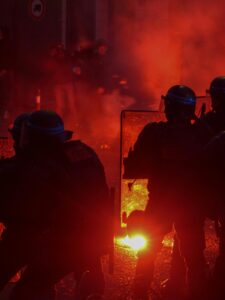
Who doesn’t remember the CNN reporter with the burning police station in the background while he reported that the “demonstrations were mostly peaceful…”
 My undergraduate degree is in journalism. I know a little about how reporting goes. Or, at least, how it used to go!
I studied at, what was then, the #9 school of journalism in the nation. My professors included editorial veterans with newspaper, media, advertising, and marketing experience. I was taught to present the truth in an unbiased and entertaining way. One professor constantly reminded us, “If a reader can tell what your political belief is by reading your article- you should switch to the editorial department and abandon news writing!”
I agree with him!
What do you think?
Please comment, and tell a friend to check out “aboomersthoughts.com”
Thanks,
Phil
My undergraduate degree is in journalism. I know a little about how reporting goes. Or, at least, how it used to go!
I studied at, what was then, the #9 school of journalism in the nation. My professors included editorial veterans with newspaper, media, advertising, and marketing experience. I was taught to present the truth in an unbiased and entertaining way. One professor constantly reminded us, “If a reader can tell what your political belief is by reading your article- you should switch to the editorial department and abandon news writing!”
I agree with him!
What do you think?
Please comment, and tell a friend to check out “aboomersthoughts.com”
Thanks,
Phil